YIHUA / MANUFACTURING GUIDE
Custom Shaped Crayons: Formulation, Injection Molds and Brand Development
A practical guide for brands developing custom character crayons: compare formulations, plan injection molds and approve physical samples before production.
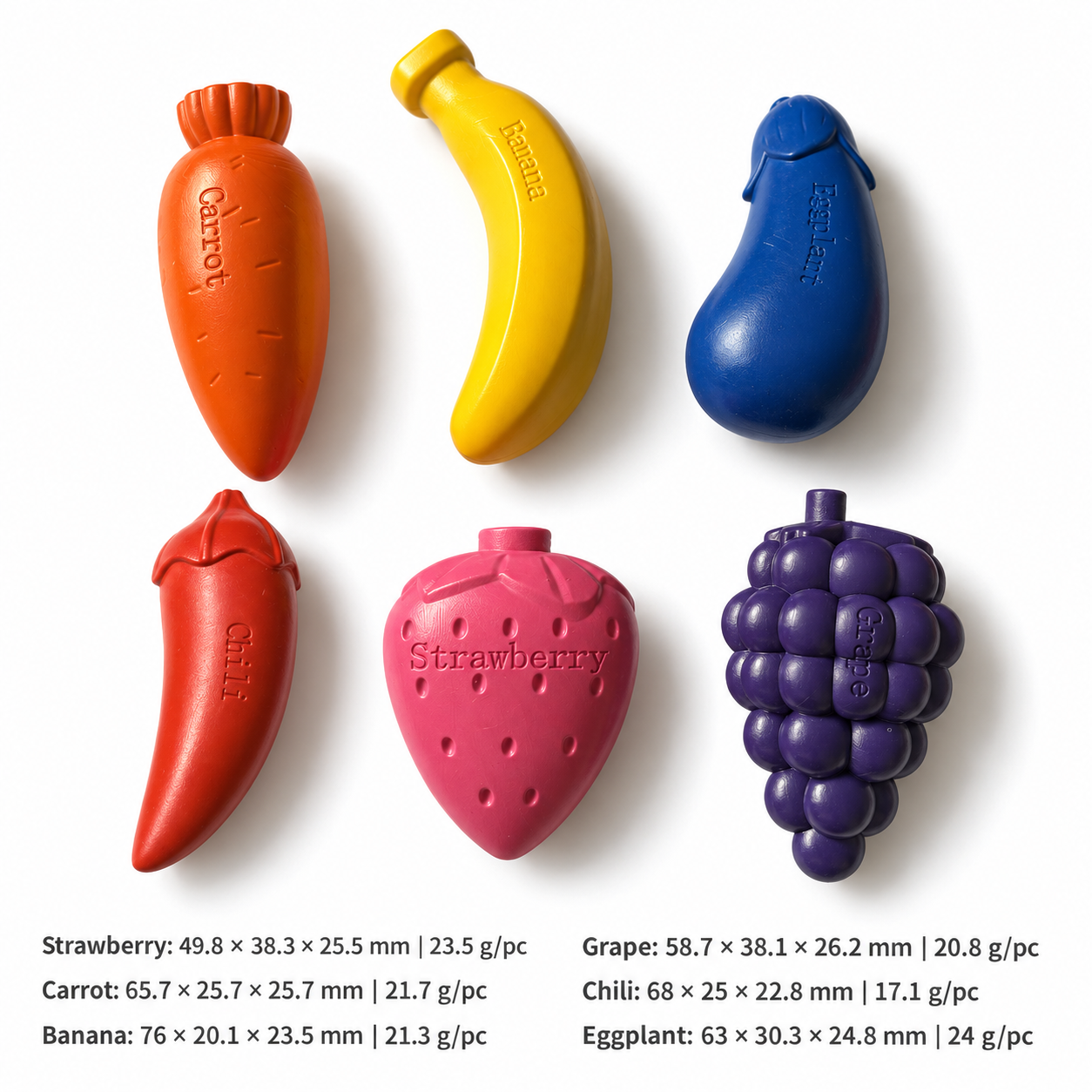
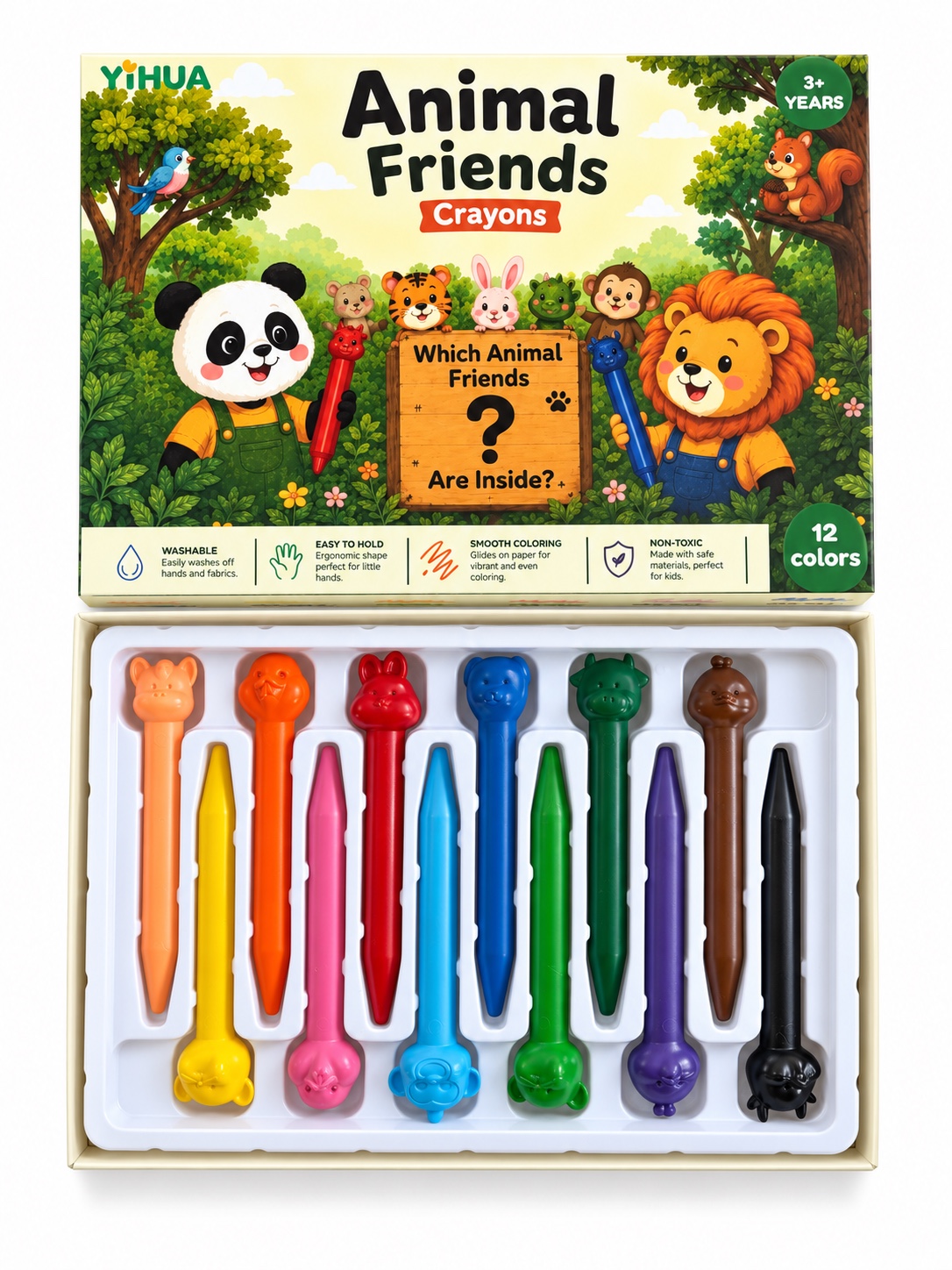
A character-shaped crayon should do more than look attractive in a product photograph. Its colouring performance, finish, handling and durability should also meet the expectations of the brand selling it.
For buyers sourcing custom shaped crayons from a manufacturer in China, development starts with two connected questions: can the design be produced consistently, and will the finished crayon perform as intended?
YIHUA develops injection molded crayons with custom shapes, formulation options, colours and packaging. This guide explains what buyers should discuss before approving a custom crayon mold and moving into production.
What are injection molded shaped crayons?
“Shaped” describes the product’s appearance. “Injection molded” describes how it is made. Injection molding can be used to develop animal, fruit, plant, alphabet and brand-character shapes, although not every shaped crayon on the market uses this process.
Plastic crayons can contain polymer resin within the colouring material itself. The term does not simply mean a crayon with a plastic barrel.
One common formulation approach uses plastic resin such as polypropylene (PP), paraffin wax, talc and colour pigments. The resin, wax, fillers and other ingredients can vary according to the required performance. This is not a universal recipe for every plastic crayon.[1]
Why can crayons with the same shape have different quality?
Two products may share a similar animal shape and look nearly identical in photographs, while using different materials and formulations.
Resins, waxes, fillers and pigments come in different grades and properties. Their suitability, compatibility and processing all matter. Buyers may notice differences in colouring feel, coverage, surface finish, debris and break resistance only after handling and drawing with the samples.
In YIHUA’s manufacturing experience, suitable high-quality raw materials combined with an adjusted formulation can help achieve smooth colouring, a refined finish and reduced drawing debris. Specific claims such as “no powdery debris” should be confirmed against approved samples and agreed evaluation conditions.
A higher quotation alone does not prove better quality. Likewise, comparing only the lowest unit price can overlook differences in materials, weight, packaging and performance.
Choose the formulation around your market and brand positioning. A drawing-focused product may prioritise light-pressure colouring and repeated layering. A character gift project also needs recognisable details, practical handling and suitable packaging. Durability requirements should be evaluated on the finished shape.
Why should buyers request physical samples?
Photographs can show shape and approximate colour. They cannot fully communicate drawing feel, surface texture, debris or mechanical performance.
Use samples to evaluate:
- Colouring: compare light-pressure lines, filled areas and repeated layering on the same paper.
- Appearance and handling: inspect character details, surface finish, parting lines and gripping areas.
- Durability: assess the finished design, including narrow sections and protruding features, under agreed conditions.
- Cleaning and packaging: check washability on specified surfaces and review the final tray, box and transport protection.
Existing formulation samples help establish the colouring direction. Samples from the new mold help confirm the final design. Buyers should also approve the complete colour assortment and final packaging before bulk production.
Benefits of custom injection molded crayons
Shapes that express your brand
Custom molds can incorporate character outlines, relief details and brand elements into the product itself. Before tooling, evaluate which details can be reproduced and whether the finished shape remains practical to hold and manufacture.
Formulation options beyond appearance
YIHUA offers multiple formulation directions for buyers to evaluate. Colouring feel, finish, cleaning requirements and strength can be discussed alongside the shape and packaging.
Cleaner handling and washable options
Cleaner handling, washability and varied shapes are key development priorities for YIHUA’s injection molded crayons. Cleaning claims must identify the surfaces and methods covered. A result on one surface should not be extended to every fabric, wall or paper. Washability does not automatically mean colour can be removed from paper.
A tooling plan suited to your project
YIHUA can discuss cost-effective custom crayon mold development. Actual tooling cost depends on size, complexity, construction and cavity arrangement. A final design is needed to assess the investment; there is no single tooling price suitable for every project.
One colour per crayon, multiple colours per set
Each YIHUA injection molded crayon is one colour throughout. Different coloured crayons can be combined into 6-, 12-, 24- or 36-colour sets according to the buyer’s requirements, with customised shapes, colour assortments and packaging.
“One colour per crayon” refers to the individual piece: a single crayon does not contain multiple colours. It does not limit the number of colours available in a set. When requesting a quotation, specify the number of pieces and colours per set, along with any required shape-to-colour combinations.
Can one mold contain several shapes?
Yes, subject to design assessment. The number of shapes is different from the number of cavities. A mold may contain repeated cavities of one shape or cavities for several designs.
Dimensions, piece weight, geometry, mold construction and equipment conditions influence the arrangement.
Colour planning matters too. In a single-colour molding cycle, multiple shapes in the same mold are produced in the same colour. If every rabbit must be pink and every leaf green, discuss production batches, cavity allocation, sorting and set quantities before tooling.
What should buyers provide for a custom crayon mold?
You can start with artwork, a 3D file, a physical sample, reference images or a product idea. YIHUA can help develop an initial concept into a defined manufacturing proposal.
For a useful assessment, share as much of the following as possible:
- Shape or character references and details that must be retained.
- Target dimensions and piece weight.
- Colours for each crayon and the complete set.
- Number of pieces per set and expected order quantity.
- Colouring, cleaning and durability requirements.
- Intended users and destination market.
- Packaging direction, budget and planned launch date.
You do not need to solve every technical question before contacting a manufacturer. A clear commercial brief helps the factory recommend a suitable development route.
From an idea to production with YIHUA
Our development discussions cover the brief, design feasibility, formulation samples, confirmed tooling, mold trials, finished-product approval and packaging.
YIHUA was established in 2025, with its predecessor factory and team working in crayons and stamps since 2015. Our capabilities include mold design, CNC engraving, injection molding, formulation development, assembly and packaging.
You can begin with an idea. YIHUA helps move it through design, sampling, tooling and manufacturing, with the final specifications confirmed before production.
For each project, clarify mold ownership, storage and maintenance, modification costs, order quantities and lead times. Crayon mold development is a separate matter from stamp artwork plate charges.
Discuss your custom shaped crayon project
Send YIHUA your idea, artwork or reference sample, together with your expected quantity and target market. We can discuss formulation options, shapes, colours and packaging and quote for the specific project. Our usual trade terms are FOB Ningbo, China.
Email: lxiaoxian232@gmail.com WhatsApp: Contact YIHUA
See our existing fruit-shaped crayons and animal-shaped crayons as examples of shaped products.
Frequently asked questions
Can YIHUA work from an idea without a 3D file? Yes. Share your concept, use case and references. We can help assess the design and manufacturing plan; the final design must be confirmed before tooling.
Do plastic crayons with the same shape have the same quality? Not necessarily. Materials, formulation and production control can differ. Compare physical samples for colouring, finish and durability.
Can several shapes be arranged in one mold? This can be assessed based on dimensions, piece weights and mold construction. Shape count and cavity count are different considerations.
What colour sets can YIHUA customise? Each injection molded crayon is one colour throughout. We can combine different coloured crayons into 6-, 12-, 24- or 36-colour sets according to your requirements. A single crayon does not contain multiple colours.
What should be confirmed before making a new mold? Confirm the design, dimensions, colour arrangement, formulation direction and expected quantities, and discuss packaging, budget and launch timing.
Technical reference
[1] CN109266020B — Color plastic crayon material and preparation method and application thereof. This published patent illustrates one material approach, not a universal recipe or a YIHUA patent.